

Is the World Cup Culturally Relevant?
I love football and the World Cup, so excuse me for skewing this essay favourably. The tournament as some of you may know happens once every four years and to me it always was the benchmark from a technical point of view of where the game is at. We have been presented with iconic moments like Messi’s crowning triumph in 2022 🐐, also importantly Morocco, an Arab and African nation reaching the semi-final stage for the first time in history, France’s multicultural team and their triumph in the prior edition was also hailed as symbolic of the current times. These were just the most recent events, past editions have gifted us with discovery of all corners of the globe: Japan, Korea, Qatar, Russia, USA and South Africa each playing host outside of the football powerhouses of Europe and South America. If the location does not do it for you, how about the starring cast? Pele, the king of football gave soccer its first global superstar. Maradona is a god to Argentinians and a villain to many others. Europe has its elegance masters: Beckenbauer, Cruyff and Zidane, whilst the rest of the world also contributes with quirky and curious characters, Higuita who refused to be limited by the goalkeeping area, and Roger Milla the Cameroonian who taught the world to dance.
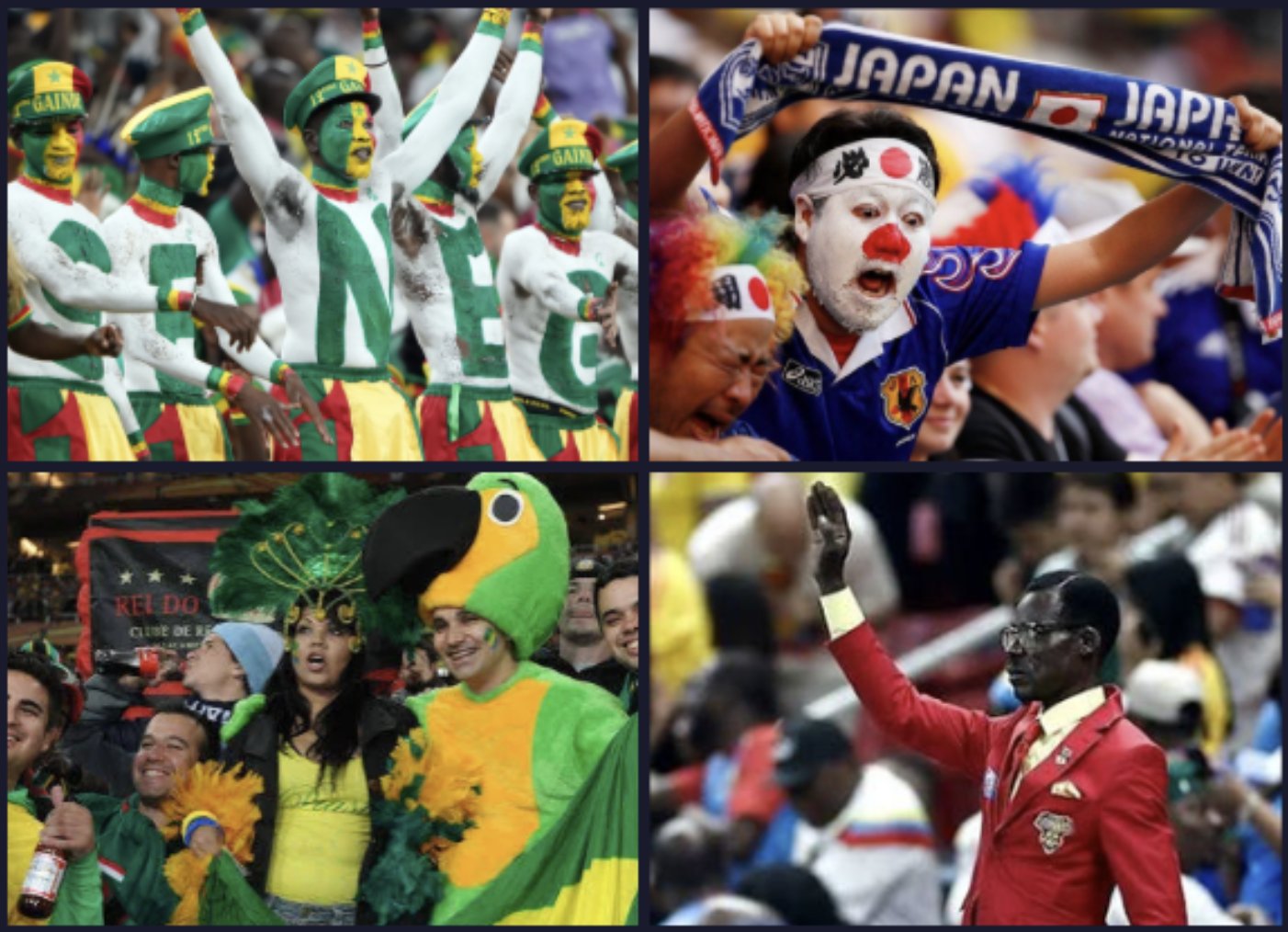
The beauty of the World Cup does not reside solely on-the-field. Whilst nail-biting penalty shoot-outs are certainly memorable and legends are born from the competition, the joy of the tournament resides in the sense of belonging. This is why the World Cup is an ideal backdrop to explain the central theme of this essay. Cultural Relevance is an abstract theme, which loses meaning if placed within an analytical framework. It emerges through identity, feeling that you belong and seeing yourself represented. So whilst only eight countries have historically triumphed at the World Cup, somehow the whole globe seems to come along to the party.
Everyone brings their most colorful self. The greatest fear entering into this 2026 edition is that one of the hosts, the USA, is at war with one of the participants, Iran, with geopolitical tensions spilling over to neighbouring nations and economic partners. Furthermore we live in a world wherein “reality entrepreneurs” through mainstream and social media try to skew the world’s view to favor their agenda, and it leaves the common person with a sense of dread and doom about the age we live in. Many feared that the World Cup would be overshadowed by negativity and global events and that the powers that be will overly manufacture and commercialise the experience.
Enter the wonder of cultural exchange and the lost art of seeing the world in person and with your own eyes. My YouTube feed (here and here) is flush with fan encounters, and they are wild, loud, wacky and wonderful, and it feels like suddenly the world is collectively remembering that we all like a party, no matter our race, color, fandom or belief system. As long as someone presents us with enough common ground, we can find a happy place. This is how this World Cup will hopefully be remembered, as a time and place the world came together.
So whilst the feeling of Cultural Relevance is a sense of identity and belonging, one can identify it through various cross-sections. Across each of these subsections I will show how different stakeholders, ranging from the on-the-ground fans, the athletes and all the way through large corporations, entertainment celebrities and powerful politicians all seem to want a piece of World Cup action. But if it were just a platform for public image, people would eventually see through it. My argument is that the World Cup has pulling power, and critically it is fan culture that seems to define what will be remembered through time (and the internet). Culture bubbles up, it is not fed through broadcasters, it acquires meaning through moments and representation.
Key Characters: Sports Heroes
The hero arc is a story telling pillar and sports delivers hero stories in droves. The big name players present one arena, Messi is currently the greatest scorer of all-time, Ronaldo is the first to score in 6 consecutive editions and Mbappe is seemingly on his way to eclipse both those records. But other athletes’ human stories cut deep and portray the emotional side of the game. Alireza Beiranvand, Iran’s goalkeeper grew up in a family of shepherds and was found homeless by his first club. Inaki Williams and Nico Williams are brothers, the former represents Ghana, whilst the latter, Spain. Born in Bilbao, Spain to Ghanaian parents who had arrived in Spain by crossing the Sahara on foot and jumping the Melilla border fence, the brothers have a phenomenal backstory and football skills to match. Even popular players like Croatian superstar Luka Modric endured through the war of independence, spending his childhood as a refugee. Undersized and repeatedly doubted by scouts, he overcame incredible odds to become the engine of his country of just 4 million people and reach a historic World Cup final in 2018.
Individual people can relate to these sports heroes. Fans get behind them and pundits fill them with praise. Whilst big brands don title winning athletes with lucrative endorsements, the world cup offers more than meets the eye and deeper meaning for those who care to search.
Narratives and Themes
Nothing is bigger than the Super Bowl they say, ads cost $10 million for 30 seconds according to Bloomberg. Bad Bunny’s live performance at the half-time show drew 128.2 million viewers. 2 million Knicks fans swarmed the streets of New York this month as the NBA franchise ended a 53 year old championship drought. People in New York could be forgiven for having no clue that a tournament had kicked off in their own back yard. Fifa tells us five billion people are football fans (more devotees than Christianity), yet its biggest event is being hosted by the one nation that calls it “Soccer”. In the US, “football” is played by carrying an oval shaped pig-skin with your hands.
So do Americans care? In the US, competitive soccer is largely a boutique sport for wealthier families. Yet, when Christian Pulisic and his USMNT buddies put four goals past Paraguay in their opening match in L.A., and then a further two goals past Australia in Seattle people definitely took notice. America likes winners, and this US team is winning with style on their home soil. Clint Dempsey, all-time top goal scorer for the USMNT shared on a broadcast that these wins gave the national team its “twelfth man”, a passionate fan base to charge them through the tournament. Politicians and celebrities turned up too, Tom Cruise was with David Beckham, Brad Pitt, DiCaprio and Bill Gates wanted to see and be seen, and this time the action on the pitch did not disappoint.
Ticket pricing has emerged as a significant point of contention during the tournament, especially as images of vacant seating at various games have begun to circulate. A deeper look into public discourse shows that discussions regarding ticket costs have been negative. Recently, Fifa’s marketplace, which serves as a resale platform, advertised “four tickets to the final at a cost of $2.3 million each”. This reflects a mounting sense of irritation among fans who believe that high prices are effectively barring many supporters from attending. What started as a grievance within the football community has evolved into a broader conversation. It has sparked intense debates concerning the general affordability of live sports, stadium attendance rates, and the ongoing struggle to find a middle ground between driving commercial revenue and preserving the authenticity of the fan experience.
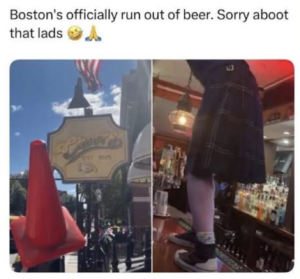
Fortunately the entertainment neither begins, nor ends in the stadiums themselves. Beyond just viewing, the World Cup invites you to fully immerse yourself in the experience. The Scottish “Tartan Army” have created a home away from home in Boston, Japanese fans are tasting authentic Mexican tacos for the first time whilst various local bars in Vancouver and Seattle are struggling with beer shortage due to never-before-seen consumption levels from travelling British and Nordic fans. “The Australians were actually trying to drink us dry,” Vancouver’s Tyler Broers told The Canadian Press earlier this week.
Even for the fans at home, the sense of immersion is not lost. Communities go to their local pubs to watch the match of the day, and banter with fellow patrons. My wife, who grew up in Mexico, watches all ‘El Tri’ games in a bar overflowing with green kits and sipping on Margaritas. Families, colleagues and friends create personal intrigue as they take part in score prediction pools to give a sense of tension to each and every game. These are some of many ways individuals sense the moment on their own skin with a shared sense of community.
Music / Fashion / Tech
‘Notti Magiche’ Italia 90 music anthem is what melts my heart, but arguably Shakira’s “Waka-Waka” Africa’s 2010 banger is the tournament’s most recognisable song. This year, she was invited to try again with “Dai Dai”, the song landed with less fan fare. K-pop sensation Lisa had a go and so did a host of other artists. My favourite tune is this quirky rendition from Bosnian band Dubioza Kolektiv – my friends hate it, but I think it would be fun in a stadium. American fans and various other nations seem to be taking to old classic “Country Road Take me Home”. Difficult to manufacture popularity, but when a tune catches on, it spreads like wildfire. As long as the tune is not “It’s coming home” England’s notorious ear bug, I happily hum along.
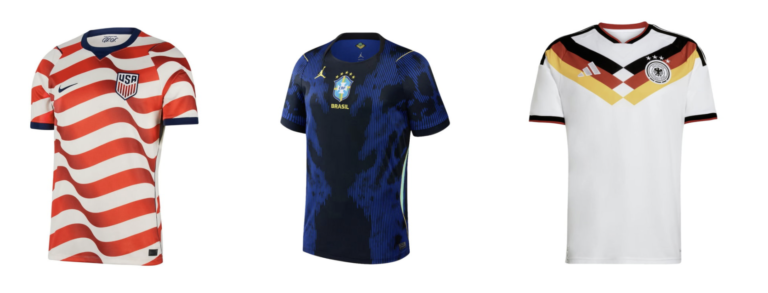
Whilst music creators may be missing a beat, kit designers from the world’s sports brands have gifted us with some of the best kits of any edition. The USA team’s waving flag “Where’s Waldo” jersey may not be everyone’s favourite design but it’s fast becoming iconic. Brazil’s away kit is Jordan’s first foray into the sport – and it’s a win! Adidas have thrown it back with retro feel kits for the likes of Colombia, Mexico and possibly the most celebrated, the Germany kit. Football fashion is increasingly blurring the lines between sportswear and streetwear and it’s clear to see they have fans all over the globe reaching into their wallet to purchase not just their nation’s kit, but multiple of the items on display this year.
“It’s a storytelling tool and it’s super powerful – you feel like you’re in the middle of the action; you experience the speed as well as the pressure on the referee.”
– SVG Europe article about the RefCam technology introduction
The RefCam allows TV spectators to watch a key game highlight right from the pitch, a true “what it is like to be there” experience. Despite some apparent initial reservations, Pierluigi Collina, chairman of the FIFA Referees Committee, declared that he was a big fan, with the use of referee-mounted cameras going “beyond our expectations,” he said. Riedel Communications’ ‘RefCam’ branded technology was developed via a joint venture called In-YS (In Your Shoes), consisting of Riedel alongside DFB referees Patrick Kessel and Nicolas Winter. It is evidence that technology can gift fans with perspectives not previously understood, placing referees as positive protagonists.
More Soccertech on display at the World Cup include connected match balls, with rechargeable internal sensors that transmit motion and location data 500 times per second and tracking cameras at stadiums that help officials reliably track limbs and offside margins during fast, obstructed movements. In the meantime Robot dogs, notably Boston Dynamics Spot, are a major security feature at the 2026 World Cup. They are patrolling perimeters in US cities like Dallas, and in Mexican cities like Monterrey. Equipped with thermal cameras, chemical sensors, and 360-degree video, they keep human officers out of harm’s way. To nobody’s surprise, newly introduced prediction market platforms have seen a 300% increase over the prior ten-day period with over $2 billion in volume during the opening days of the tournament.
Identity, Commercialisation and Politics
After a 2-2 draw in their opening game with New Zealand Monday night, Iran’s team was forced to fly back to Mexico rather than remain in Los Angeles and do a recovery session on Tuesday as they had hoped. The game took place just a day after President Donald Trump claimed he had reached a deal with Iran’s government to end the long drawn out war. In addition, 15 support staff members of the Iranian soccer federation were denied U.S. visas. Others impacted, as shared by the media include Omar Artan, a respected Somali referee who was denied entry to the US, and DR Congo superfan ‘Lumumba vea’ who famously supports his nation whilst posing as a statue during each game. Cape Verde goalkeeper Vozinha had a historic performance versus Spain, but his mum could not witness from the stands due to travel restrictions on Africans obtaining VISAs.
On the ground however, football fever is casting the political shadows aside. Iranian goal scorer Rezaeian was full of praise for Tijuana residents, the team’s base in Mexico, as mariachi bands guided the team through the airport whilst Algerians have found a welcoming place in Kansas, home to a significant Algerian community. The presence of diaspora’s is being noted throughout, Bosnians are visiting St Louis in droves, with 60,000 fans attending a pre-tournament friendly, mostly immigrants living in the US. Ecuadorians gather in Corona or Jackson Heights, NY whilst African support is heavy in Houston, Texas.
Fans are also booing the newly introduced hydration breaks (even in matches in air-conditioned arenas), obviously created to allow advertising. While BBC keeps live commentary, Fox Sports cuts to commercials, reportedly bringing in $1.2 million per break. High profile players from France and Brazil, tournament favourites are complaining as stadiums built for the NFL, with artificial surfaces are being used, causing ‘dry and slow’ pitch conditions. The underdog teams however take advantage, and we have already witnessed resilient displays from nations such as Cape Verde, Qatar, New Zealand and Australia. Many teams feel the group phase is their moment in time to make their nation proud. Mini World Cup legends are forged in the group stages by smaller teams carrying a proud tradition and unifying a people and culture onto the pitch. The action on the pitch, if not too obstructed, has a tendency to excite despite politicians and organisers best attempt to tinker with the structure.
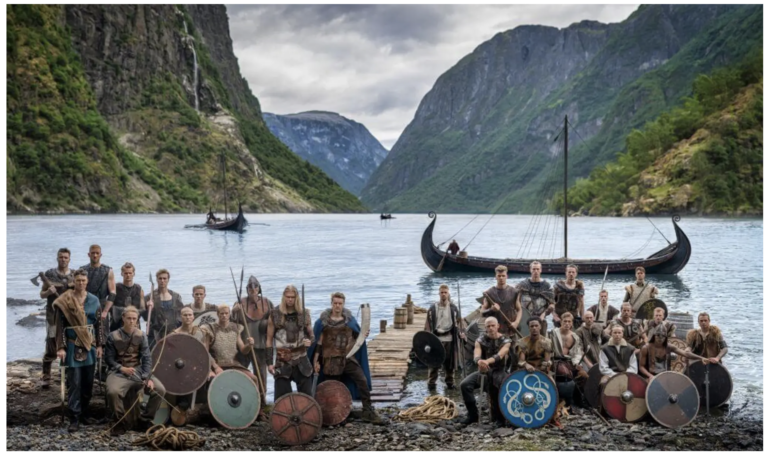
Cultural identity pours through wherever you look. Norwegian fans are performing a Viking row to fire on their very Viking looking superstar Haaland (see Norway team photo). Japanese etiquette follows them wherever they travel, with fans famously cleaning the stands after their nation’s game, and similarly their team leaving the dressing room spotless after their departure. African nations decorate the stands with color and pride, with traditional costumes and rituals, whilst voodoo priests use the dark arts to allegedly give Ghana’s heroes the edge over England in their encounter. Arab and North African teams very noticeably praise Allah at every goal and team success, whilst also bursting into the streets into song and dance carrying Egyptian hero Salah following a historic first world cup victory.
So what does the World Cup tell us about Cultural Relevance?
To answer the titular question, certainly the World Cup cannot be ignored. Football is too popular globally and even if you ignore the spectacle surrounding the sporting event, the materiality of the tournament from a sporting legacy perspective is enough to carry its leverage alone. This World Cup in particular is relevant because the fans that are in attendance and celebrate it, do so in defiance of the prejudiced narrative that both legacy and social media imposed upon the tournament in its lead up, and despite the attempt of the organising and political bodies to control and extract from the experience. For a World Cup the test is not how many people watched but whether the tournament became woven into how communities see themselves, and whether that lasts past the final whistle.
When building a product, nurturing a community or hosting an event, we will rarely have the gaze of the entire global upon us. The point of this essay was to explore those elements that are making this World Cup memorable and the lessons we can extract therefrom. Central to these learnings is the growing importance of live entertainment. In a world of technology abundance and excess, people increasingly crave lived experience. Live entertainment is subject to control through ticket prices, audience access regulations and political agendas, yet we observe that lived experience is the gauge on which cultural relevance is appreciated.
This World Cup shows us that the environment may be far from perfect but when people are allowed enough room to find their own sense of belonging, they allow a flavor of delight to enter the room in unexpected ways. Other people participating in the same lived experience are a central ingredient, whether the common line is fandom of sporting heroes or diaspora communities sharing cultural or historical common ties, humans are social animals and search for social cues from other humans. Common stories offer a relatable theme and lore, my favourite kind are when the lived experience develops its own emergent customs, songs and dance independent from what the organisers designed. Fashion, song and tech can contribute too – but be mindful that it cannot always be engineered to fit, and will be rejected when forced. Just like an awkwardly mounted camera on a match official can give fans immense delight, immersive technology and design can elevate any experience. Finally, knowing your audience builds a sense of identity and a common purpose that answers why passively experiencing something can rarely be a substitute for being part of its story.
Let’s celebrate shared lived experiences, the wonder of cultural exchange and the lost art of seeing the world in person and with your own eyes.
Author bio: Adrian is a venture capital and portfolio management professional for early-stage startup investors.
For more information: www.clutchplayadvisors.co


